
Local roofers · Tonbridge
Roofers in Tonbridge.
Below the castle mound, Tonbridge follows the Medway through low ground, and many of its gardens are full of big trees. Roofs here tend to dry slowly and collect a lot of leaf litter, so wear often shows up as stained tiles and choked valleys long before anything drips indoors. We tell you whether those marks are only surface deep, then price any work that is genuinely needed.
- Slate or tilefor a full re-roof
- Clearwritten price every time
- Same dayusual reply to enquiries
A weathered roof is not always a failing roof
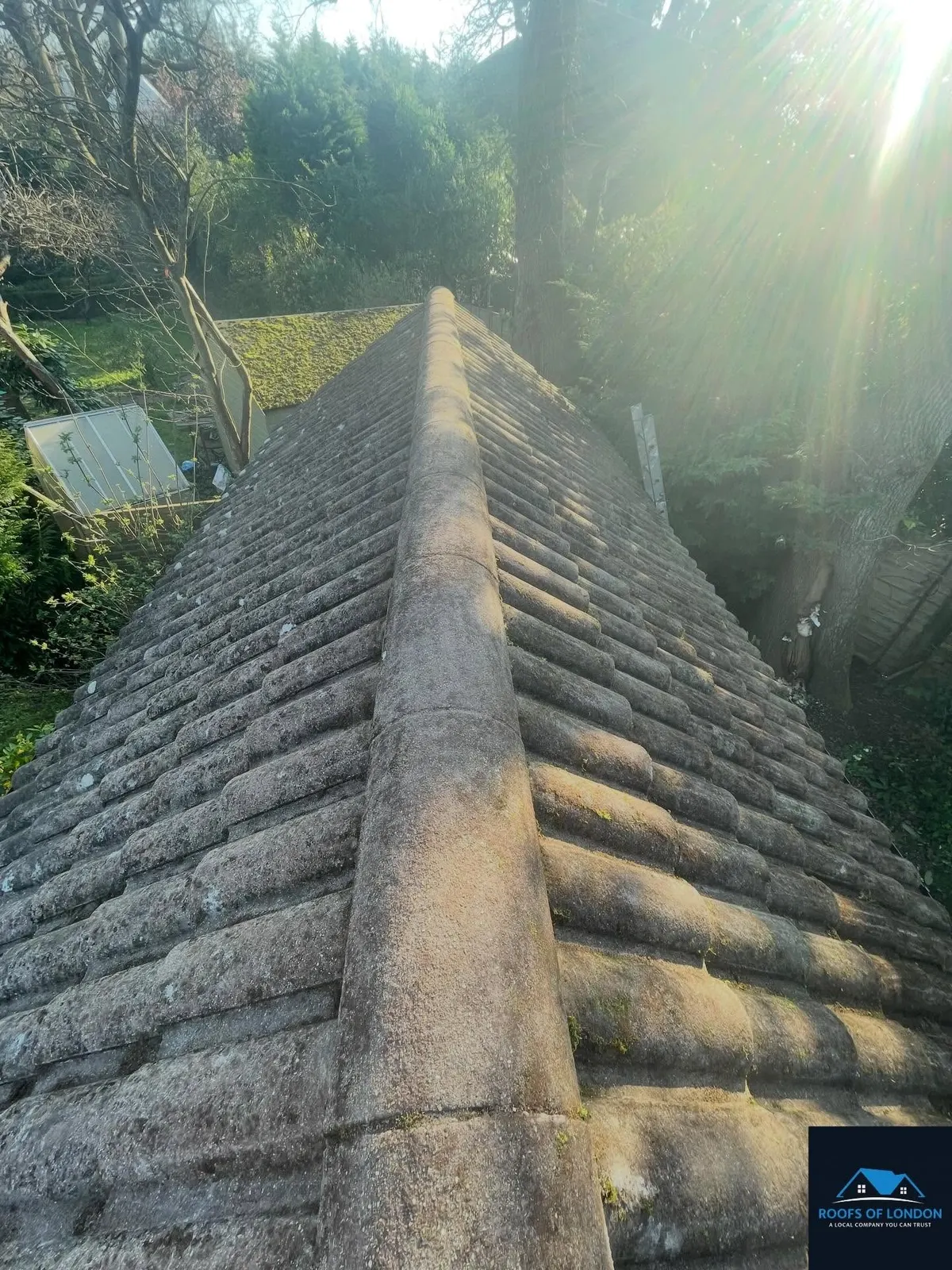
Old concrete tiles lose their coloured surface and pick up lichen, which can make a sound roof look finished. What counts is the body of the tile and everything fixing it down. Shade from trees slows drying on the slopes that get least sun, and moss on those slopes can hold water against the tile edges, so we test the condition instead of judging by colour.
- Faded tiles can still have plenty of working life
- Tiles that flake or crumble at the edges have reached their limit
- Moss matters mainly as a sign of a slope that stays wet
- Hairline cracks are easier to see close up than from the garden
Where trees and valleys cause the real trouble
Any place where two slopes meet is a natural collecting point for leaves, and a blocked valley sends rainwater sideways under the tiles. Tonbridge’s tree-lined roads and mature plots make this a regular autumn and winter problem. Gutters at the foot of the slope suffer in the same way, and water that spills over them soaks fascias and walls.
- Lead valleys split with age and need checking for pinholes
- Blocked gutters can back water up into the eaves
- Branches rubbing a roof can dislodge ridge and verge tiles
- Damp battens near a valley are worth catching early
Old town, commuter streets and nearby villages
Around the High Street and the castle you’ll find older buildings where repairs need matching with care, while the railway brought Victorian streets and later commuter housing, including estates such as Higham Wood to the north. Out towards Hildenborough and Hadlow, homes become more varied, and Wealden tile-hung walls appear more often. A clay peg-tiled cottage and a 1970s estate house simply need different thinking.
- Clay tiles can often be lifted, sorted and put back
- Later estates usually have concrete tiles over bitumen felt
- Mortar ridges on older estates are often due for attention
- Check any listed status before changing materials
How the job works
- 1Walk the roof’s water pathWe follow rainwater from ridge to gutter, looking at the places where leaves and debris hold it back.
- 2Judge the tiles close upStaining is separated from real damage, and we photograph any tile that has actually started to break down.
- 3Give you the choicesYou get a straight view on repair or replacement, along with the clear written price for what we recommend.
- 4Finish at the gutterOnce the tiles, ridge or lead are done, we make sure the water can reach the downpipe, then send photos.
Why choose us in Tonbridge
- Advice based on the state of each tile, not how the roof looks from the road
- Tonbridge quotes cost nothing and carry no pressure to proceed
- A photo record of every job, from the valley up to the ridge
Common questions
What is the grey and white crust on my old concrete tiles?
That is usually lichen, which grows slowly on older tiles that stay damp. On its own it tends to be more of a cosmetic issue than a cause of leaks. We’d look at whether the tiles underneath are still sound before suggesting any work.
Does living near the Medway make a roof wear out faster?
Not directly, but low, sheltered and tree-filled ground lets a roof stay wet for longer. Slopes that dry slowly tend to grow more moss and suffer more in frost, so those are the parts we pay closest attention to.
Can fallen leaves really cause a ceiling leak?
Yes. Leaves packed into a valley or gutter stop rainwater moving, so it builds up and finds a way over the lead or under the tiles. The stain can appear some way from the blockage, which is why we follow the whole route the water takes.
Can one slope be re-roofed and the other left alone?
It can be done if one side has clearly failed and the other still has years left. The ridge is the awkward part, as it ties the two slopes together. We’ll show you the condition of both and tell you honestly if doing half makes sense.
Ready for a free, no-obligation quote?
Speak to our team today. London, Essex, Kent, Sussex and the Cotswolds.