Roofing service
Flat Roofs in London.
New felt flat roofs for extensions, garages and dormers.
Flat Roofs done properly
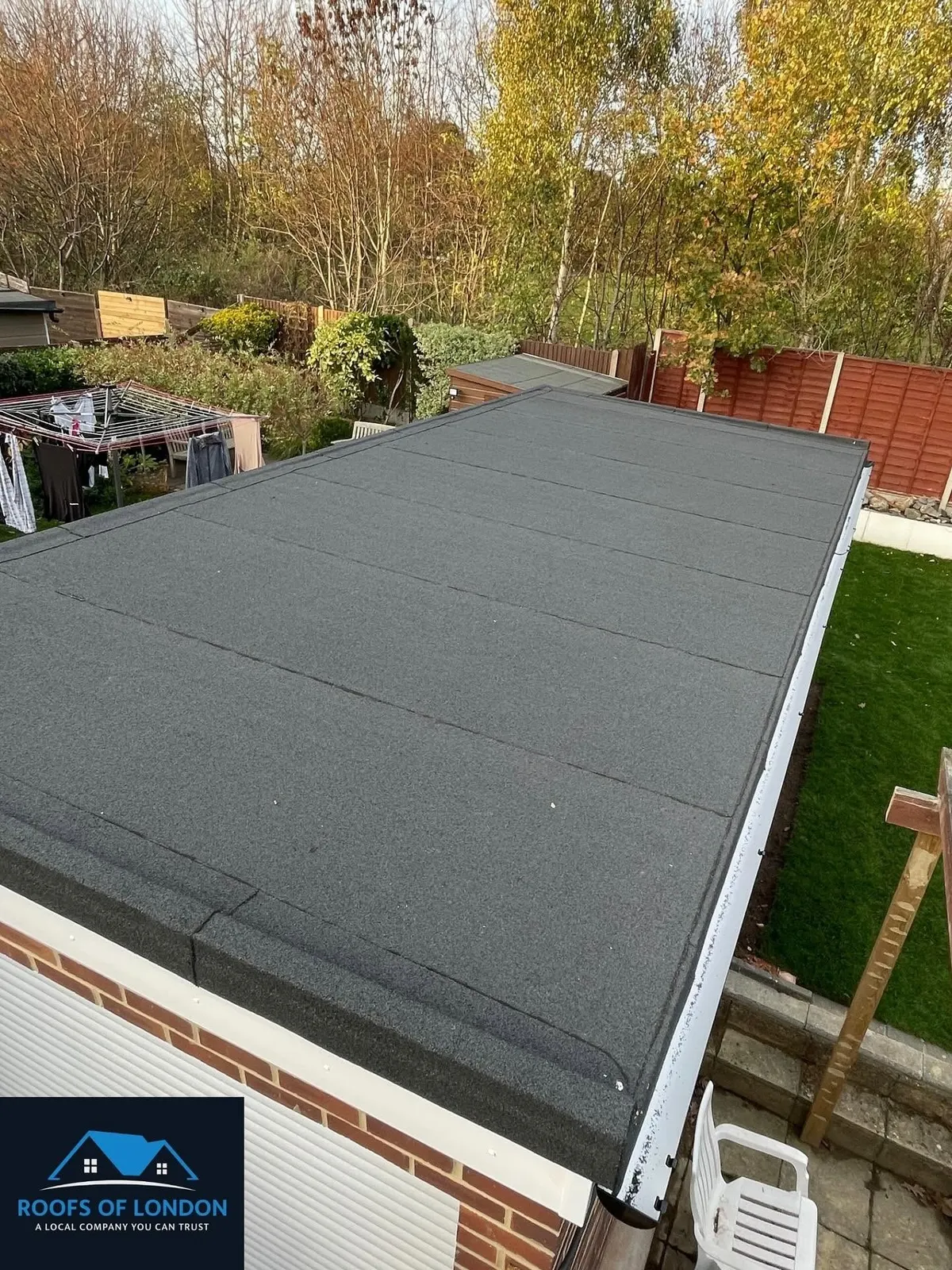
We install new flat roofs on extensions, garages, bay windows and dormers. Old coverings are stripped, decking checked or replaced, and a new multi-layer felt system laid with proper falls so water runs off.
What's included
- Torch-on felt flat roofs
- New decking and insulation
- Edge trims, drips and upstands
- Garage, extension and dormer roofs
How a new felt flat roof is built
A flat roof is a system of layers, and each one depends on the one beneath it. A new torch-on roof starts with a sound deck and a fall, then a base layer, any insulation and a mineral-finished cap sheet go on. Most of the skill is in the edges, where the felt turns up a wall or over a trim.
- Falls built in with firrings if the joists are level
- Base layer bonded to the deck before the cap sheet
- Mineral cap sheet to protect the felt from sunlight
- Upstands taken up the wall and tucked under flashing
Warm or cold: getting the build-up right
Where the insulation goes decides how the roof deals with condensation, so it has to be chosen before the felt. A warm roof puts the insulation above the deck, which is generally the safer option but raises the roof height. On a garage with no heating, insulation may not be needed at all.
- Warm roof: insulation above the deck, with no ventilation needed
- Cold roof: insulation between joists, with a ventilated gap above
- Added height can affect door thresholds and window sills
- Unheated garages can often go without insulation
When you need a new roof, and what affects the price
A new roof is the right job when the deck has gone soft or the felt has failed across most of its area. If the problem is one split or a lifted edge on an otherwise sound roof, go to our flat roof repairs page first, as that may be all it needs. Felt is the only flat roof system we install, so we’re not the right firm if you have your heart set on another material.
- Roof area, and how many layers need stripping
- Amount of decking to replace once the old roof is off
- Insulation, and any changes to the falls
- Access for materials through or around the house
Signs you need flat roofs
- Standing water after rain
- Blistering or cracking felt
- Soft spots underfoot
- Leaks into the room below
Spotted any of these? Call 07450 208032 for a free inspection.
Other services
- Roof RepairsLeaks, slipped or broken tiles and storm damage, found and fixed properly.
- New RoofsFull strip and re-roofs in tile or slate, built to last decades.
- uPVC Guttering, Fascias & SoffitsNew uPVC roofline that looks sharp and stops rot and overflow.
- Dry Ridge SystemsMechanically fixed ridge tiles, no more crumbling mortar.
Common questions
What is the difference between a warm and a cold flat roof?
A warm roof has insulation above the deck, keeping the structure at room temperature. A cold roof has it between the joists and relies on air moving above it. Warm roofs are generally preferred on new work, as they are less prone to condensation.
How much slope should a flat roof have?
Flat roofs are never truly flat. British Standard guidance is for a finished fall of at least 1 in 80, which usually means designing to around 1 in 40 to allow for settlement and building tolerances.
How many layers of felt go on a new flat roof?
Modern torch-on roofs are normally two or three layers, made up of a base layer and a mineral cap sheet, sometimes with an intermediate layer between. The right build-up depends on the deck and whether the roof is insulated.
Can a felt flat roof be used as a balcony or terrace?
Not as standard. Felt roofs are usually laid for occasional maintenance access, and furniture or regular foot traffic can damage the surface. A balcony also needs structural and guarding checks, so it is a separate design question.
Ready for a free, no-obligation quote?
Speak to our team today. London, Essex, Kent, Sussex and the Cotswolds.