
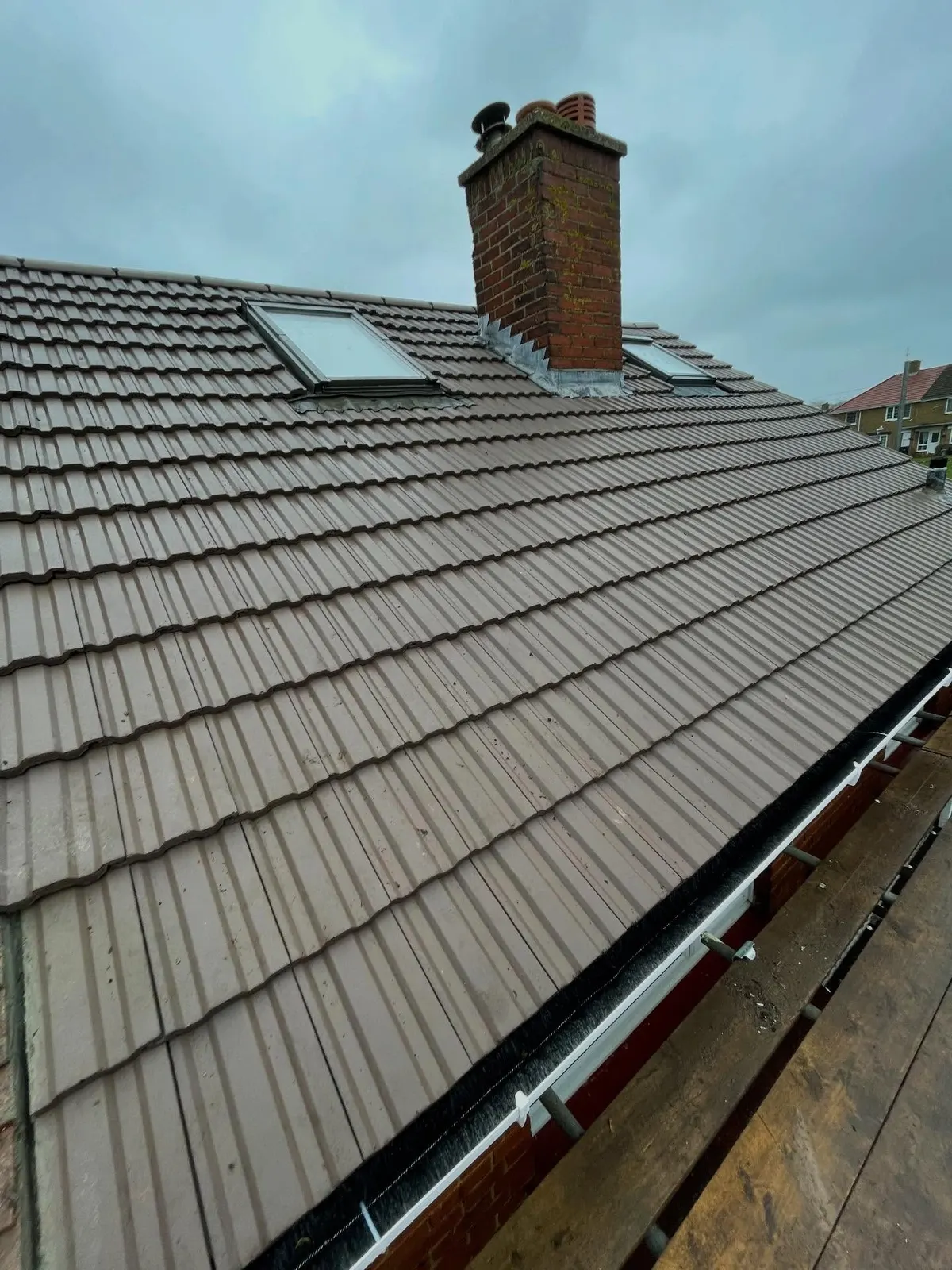
Roofing service
New Roofs in London.
Full strip and re-roofs in tile or slate, built to last decades.
New Roofs done properly
When a roof is past repairing, we strip it back, check and replace timbers where needed, and rebuild with new breathable membrane, battens and your choice of tile or slate. Everything is explained before we start.
What's included
- Full strip and re-roof
- Natural slate and concrete or clay tiles
- New breathable membrane and treated battens
- Timber and rafter replacement
- Matching existing tiles on period properties
What a roof replacement involves
Scaffolding goes up before a single tile is lifted, then the roof comes off in stages so the house is not left open longer than it needs to be. Once the rafters are sound, the new tiles or slates are worked from the eaves up to the ridge. The details at the edges matter as much as the main slope, because that is where most roofs start to leak.
- Batten spacing set out to suit the chosen tile or slate
- Valleys, verges and abutments rebuilt along with the slope
- Tiles fixed in line with BS 5534, the British Standard for slating and tiling
- Roof ventilation allowed for at the eaves and ridge
Slate, clay or concrete: the trade-offs
Each covering suits a different house, so the existing street and roof pitch are a better starting point than a brochure. Natural slate is the usual match for Victorian terraces, clay plain tiles suit many Edwardian houses, and concrete tiles are the common choice where budget matters most. A change of material can also change the load on the roof, so the timbers need looking at first.
- Natural slate is light and slim, but quality varies by source
- Clay plain tiles look right on period roofs, but need many more tiles per square metre
- Concrete tiles are usually the most economical, but heavier than slate
- Every tile has a minimum pitch, so a shallow roof narrows the choice
Re-roofing or repairing, and what moves the price
A new roof is the right call when the covering has failed widely, not because one leak has appeared. If the fault is confined to one area, roof repairs will cost far less and we’ll say so. Where a re-roof does make sense, the price comes down to the shape of the roof as much as its size.
- Hips, valleys and dormers take longer than a plain slope
- Scaffolding, including any pavement licence on a terraced street
- Covering chosen, and how much cutting it needs
- Rafters or other timbers found to need replacing once stripped
Signs you need new roofs
- Repeated repairs in different places
- Sagging roof line
- Widespread cracked or porous tiles
- Roof over 40–50 years old
Spotted any of these? Call 07450 208032 for a free inspection.
Other services
- Roof RepairsLeaks, slipped or broken tiles and storm damage, found and fixed properly.
- uPVC Guttering, Fascias & SoffitsNew uPVC roofline that looks sharp and stops rot and overflow.
- Dry Ridge SystemsMechanically fixed ridge tiles, no more crumbling mortar.
- Chimney RepairsRepointing, lead flashing, rebuilds and chimney removals.
Common questions
Can I stay in the house while the roof is replaced?
Usually, yes. Expect noise and some dust in the loft, so it helps to move stored items or cover them with sheets. Your rooms stay usable, though a bedroom in a loft conversion may need a closer look before work begins.
Does replacing a roof need planning permission?
Like-for-like work generally does not, but listed buildings, conservation areas and streets with an Article 4 direction can have tighter rules. Larger re-covering jobs can also come under Building Regulations, so check with your council early if you plan to change the material.
Can a roof be replaced in winter?
It can, but short days and bad weather slow it down, and the roof has to be kept covered whenever it is open. Frost also affects anything laid in mortar. An urgent roof should not wait, while a planned one may be easier in drier months.
Will my neighbours be affected if my terraced roof is replaced?
Often a little. Scaffolding may sit in front of their house or need a pavement licence, and the join between the two roofs has to be finished neatly. It is worth telling them early, and shared walls may bring in the Party Wall Act depending on the work.
Ready for a free, no-obligation quote?
Speak to our team today. London, Essex, Kent, Sussex and the Cotswolds.