
Roofing service
Dry Ridge Systems in London.
Mechanically fixed ridge tiles, no more crumbling mortar.
Dry Ridge Systems done properly
Traditional mortar-bedded ridge tiles crack and loosen over time. A dry ridge system fixes each ridge tile mechanically, so it stays put in high winds and never needs re-pointing.
What's included
- Dry ridge and dry hip installation
- Removal of old mortar-bedded ridges
- Ventilated ridge for condensation control
- Dry verge systems on gable ends
What a dry ridge system is
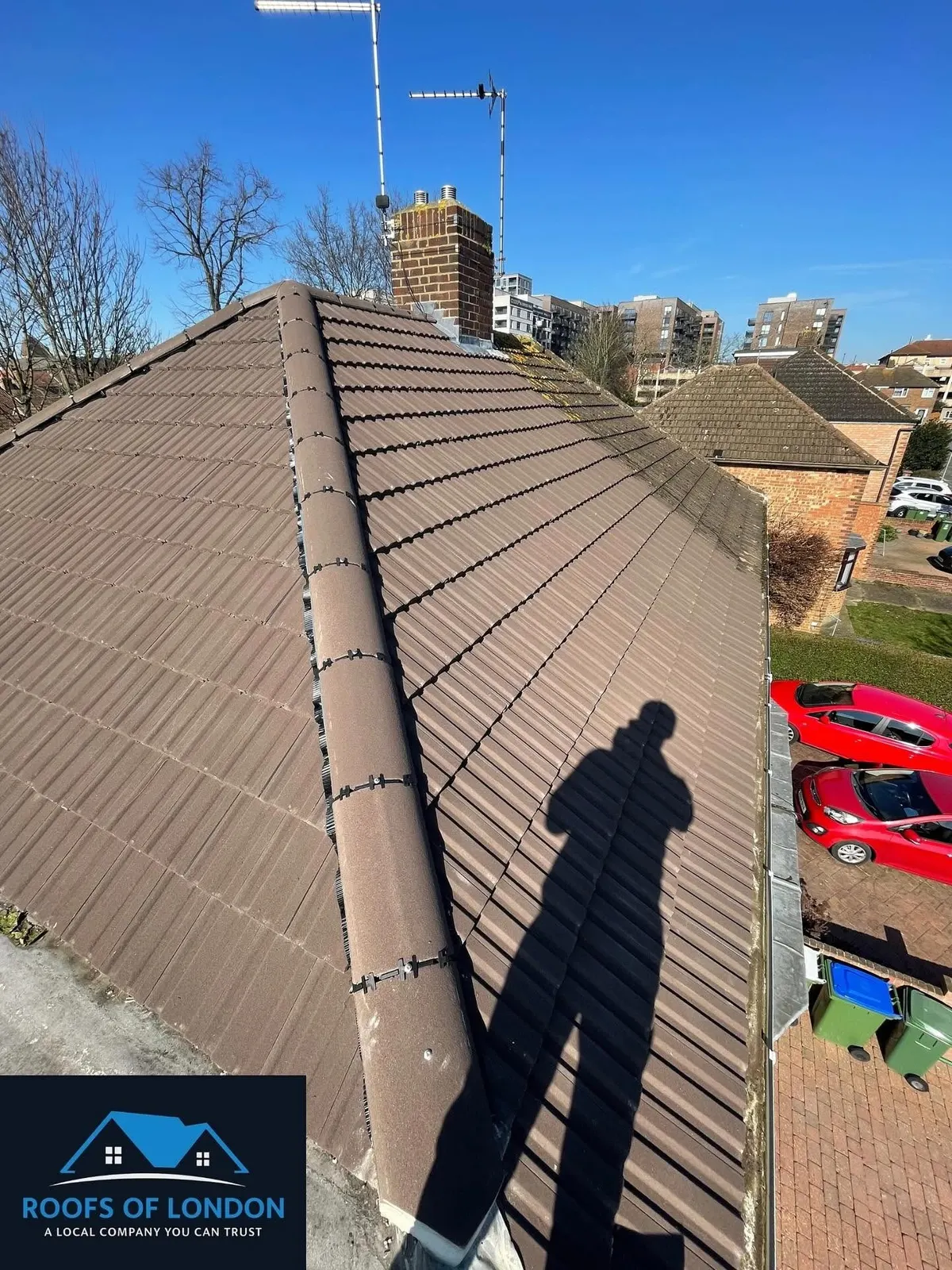
A dry ridge system is a kit that holds the top row of tiles in place with mechanical fixings rather than sand and cement. A timber batten runs along the ridge on metal brackets, a flexible roll seals the gap over the tiles either side, and each ridge tile is screwed or clipped down. The joins between ridge tiles are covered by plastic union strips, so no mortar is exposed to the weather.
- Ridge batten and brackets fixed over the top of the rafters
- Roll-out sealing strip shaped down onto the tiles
- Screws or clips holding each ridge tile
- Union strips under every joint between ridge tiles
Why roofs are moving to dry ridge
Mortar shrinks, cracks under frost and lets go of the tile, and on its own it does not count as a fixing under the current version of BS 5534. Dry systems answer that by fixing each tile mechanically, and BS 8612 now sets out how they should perform. Most also leave a small air gap at the ridge, which can help a loft with poor ventilation.
- New work needs ridge tiles mechanically fixed, with or without mortar
- Kits exist for most concrete and clay profiles
- Union strips remain visible, so the look differs from a mortar ridge
- Dry hip systems follow the same idea down each hip
When a dry ridge is the wrong choice
If the ridge tiles are sound and the look of a period roof matters, re-bedding them under our roof repairs service may suit you better. It will not fix a leak that starts somewhere else either, so the ridge should be confirmed as the cause first. Where it is the right answer, the cost depends on how much ridge and hip you have and how it is reached.
- Length of ridge, and any hips included in the job
- Scaffolding or other access to the top of the roof
- Number of cracked ridge tiles needing replacement
- Rotten felt or battens at the top of the slope: see felt and batten repairs
Signs you need dry ridge systems
- Cracked or missing ridge mortar
- Loose ridge tiles
- Mortar in the gutters
- Ridge tiles moving in wind
Spotted any of these? Call 07450 208032 for a free inspection.
Other services
- Roof RepairsLeaks, slipped or broken tiles and storm damage, found and fixed properly.
- New RoofsFull strip and re-roofs in tile or slate, built to last decades.
- uPVC Guttering, Fascias & SoffitsNew uPVC roofline that looks sharp and stops rot and overflow.
- Chimney RepairsRepointing, lead flashing, rebuilds and chimney removals.
Common questions
What is the difference between a dry ridge and a dry verge?
A dry ridge fixes the tiles along the top of the roof, and a dry verge fixes the exposed edge of the roof at a gable. They do the same job in different places, replacing mortar with mechanical fixings, and are often fitted together.
Are mortar ridges still allowed on new work?
Mortar can still be used as a bedding, but under BS 5534 it should not be the only thing holding a ridge tile. New ridge tiles should also have a mechanical fixing, which is one reason dry systems have become so common.
Can my old ridge tiles go back on with a dry system?
If they are sound and come off cleanly, they can often be reused, though old mortar has to be cleaned off first. Some older ridge tiles won’t take the fixings well, so we’ll check them and tell you if new ones make more sense.
Does a dry ridge system stop condensation in the loft?
It can help, as most kits ventilate along the ridge, but it won’t solve condensation alone. Air also needs to get in at the eaves, and a bathroom fan venting into the loft will defeat it.
Ready for a free, no-obligation quote?
Speak to our team today. London, Essex, Kent, Sussex and the Cotswolds.