Roofing service
Bargeboards in London.
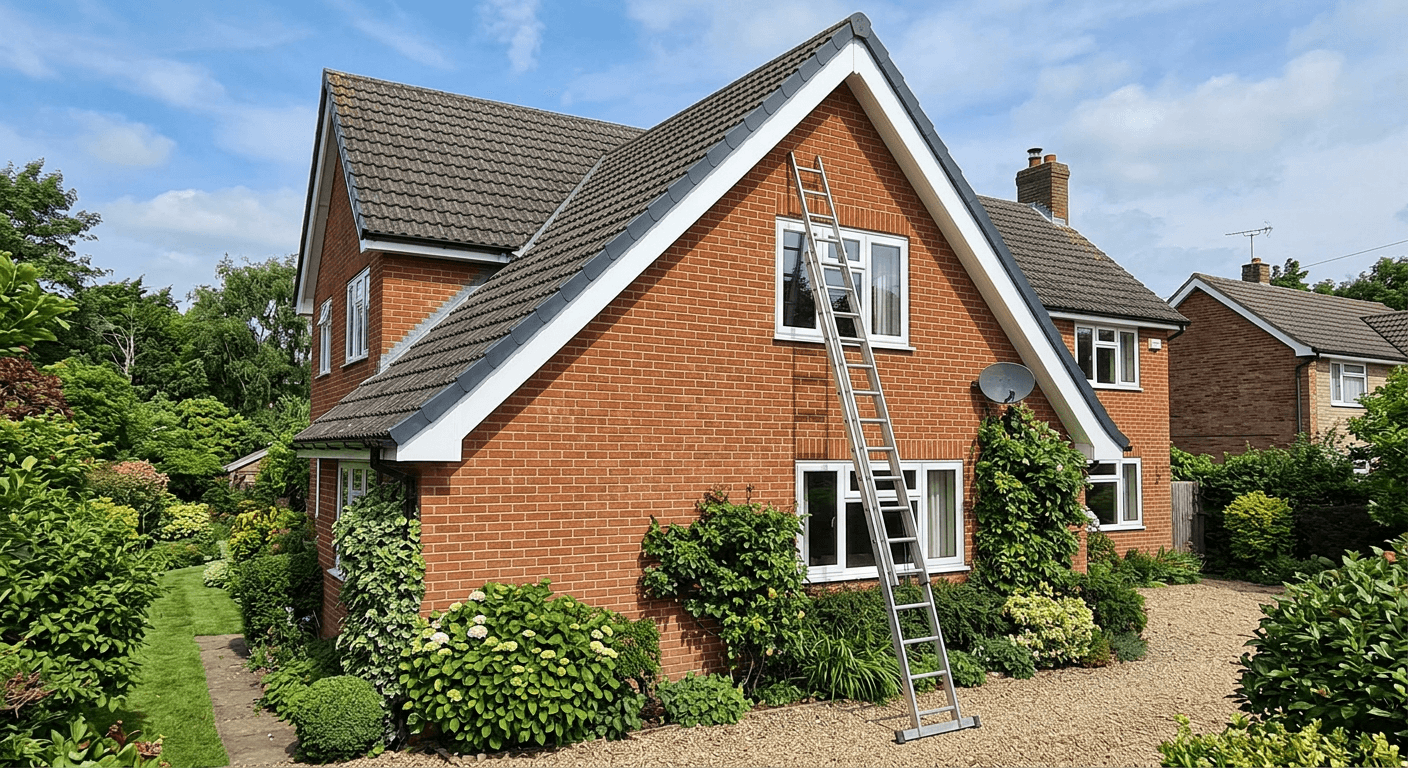
Gable-end bargeboards replaced in long-life uPVC.
Bargeboards done properly
Bargeboards protect the exposed edge of your roof at the gable end. We replace rotten timber boards with uPVC, often alongside a dry verge system for a clean, maintenance-free finish.
What's included
- uPVC bargeboard replacement
- Capping over existing timber where suitable
- Dry verge installation
- Matching to new fascias and soffits
How bargeboards are replaced
The old board is taken off so the timber behind it, often called the gable ladder, can be checked. New uPVC boards are then fixed back to sound timber, with the joint at the apex and the foot of the slope finished neatly. Where the board meets the fascia, a box end closes the corner.
- Gable ladder and rafter ends checked behind the old board
- Verge tiles checked for overhang and loose bedding
- Apex joint and foot of the board trimmed to match
- Box ends finished to line up with the fascia and gutter
Dry verge, mortar verge and timber boards
Bargeboards and the verge above them work as a pair, so it often makes sense to treat them together. A dry verge uses interlocking caps fixed to the tile edge in place of a mortar strip, which takes away the pointing but changes the look of the gable. On ornate period gables, a plain uPVC board may lose the detail you want to keep, and a joiner’s repair in timber could be the better route.
- Mortar verge: traditional look, but it needs repointing over time
- Dry verge: caps cover the edge, with no mortar to fail
- Plain uPVC: a tidy finish on simple gables
- Carved timber boards: these need a joiner, not uPVC
Other jobs to consider, and what affects the cost
If the boards are sound and only the verge mortar is loose, you may need a dry verge or a roof repair, not new bargeboards. If the rest of the eaves is also failing, doing it all as one uPVC fascias and soffits job makes better use of the access. The price mostly comes down to reaching the gable safely.
- Height of the gable, and whether scaffolding is needed
- Number of gables, dormers or porches included
- Rotten timber found behind the old boards
- Colour and match with existing uPVC fascias
Signs you need bargeboards
- Peeling paint or soft timber
- Gaps at the gable end
- Loose verge tiles
- Water staining on gable walls
Spotted any of these? Call 07450 208032 for a free inspection.
Other services
- Roof RepairsLeaks, slipped or broken tiles and storm damage, found and fixed properly.
- New RoofsFull strip and re-roofs in tile or slate, built to last decades.
- uPVC Guttering, Fascias & SoffitsNew uPVC roofline that looks sharp and stops rot and overflow.
- Dry Ridge SystemsMechanically fixed ridge tiles, no more crumbling mortar.
Common questions
What is the difference between a bargeboard and a fascia?
A bargeboard runs up the sloping edge of the roof at a gable. A fascia runs horizontally along the eaves and usually carries the gutter. They look alike once they are both uPVC, but they sit in different places.
Are bargeboards structural?
Not usually. They close off and protect the edge of the roof and don’t hold it up. The timber they fix to can matter, though, as the gable ladder supports the overhanging edge, so rot behind a board should be dealt with.
Why has my bargeboard rotted at the bottom first?
The foot of the board sits where water collects, close to the gutter end and the bottom of the verge, and cut end grain soaks up moisture quickly. Paint usually fails there first, so the soft spot often starts low down.
Can decorative bargeboards be kept on a period house?
They are worth keeping if they can be saved, especially in a conservation area, but our service is uPVC replacement and that won’t reproduce carved detail. For those boards, a joiner who works in timber is the better choice, and we’ll tell you so.
Ready for a free, no-obligation quote?
Speak to our team today. London, Essex, Kent, Sussex and the Cotswolds.