Local roofers · Sevenoaks
Roofers in Sevenoaks.
Sevenoaks has many large, older homes, often with tall chimneys, complicated roof shapes and original materials worth keeping. That calls for careful repair rather than quick fixes. We repair chimneys, tile and slate roofs across the town and nearby villages, and explain exactly what we propose before anything is touched.
- Photosof the stack, close up
- Writtenprices before we begin
- Freeno-obligation quotes
Chimneys: the hardest-working part of an older roof
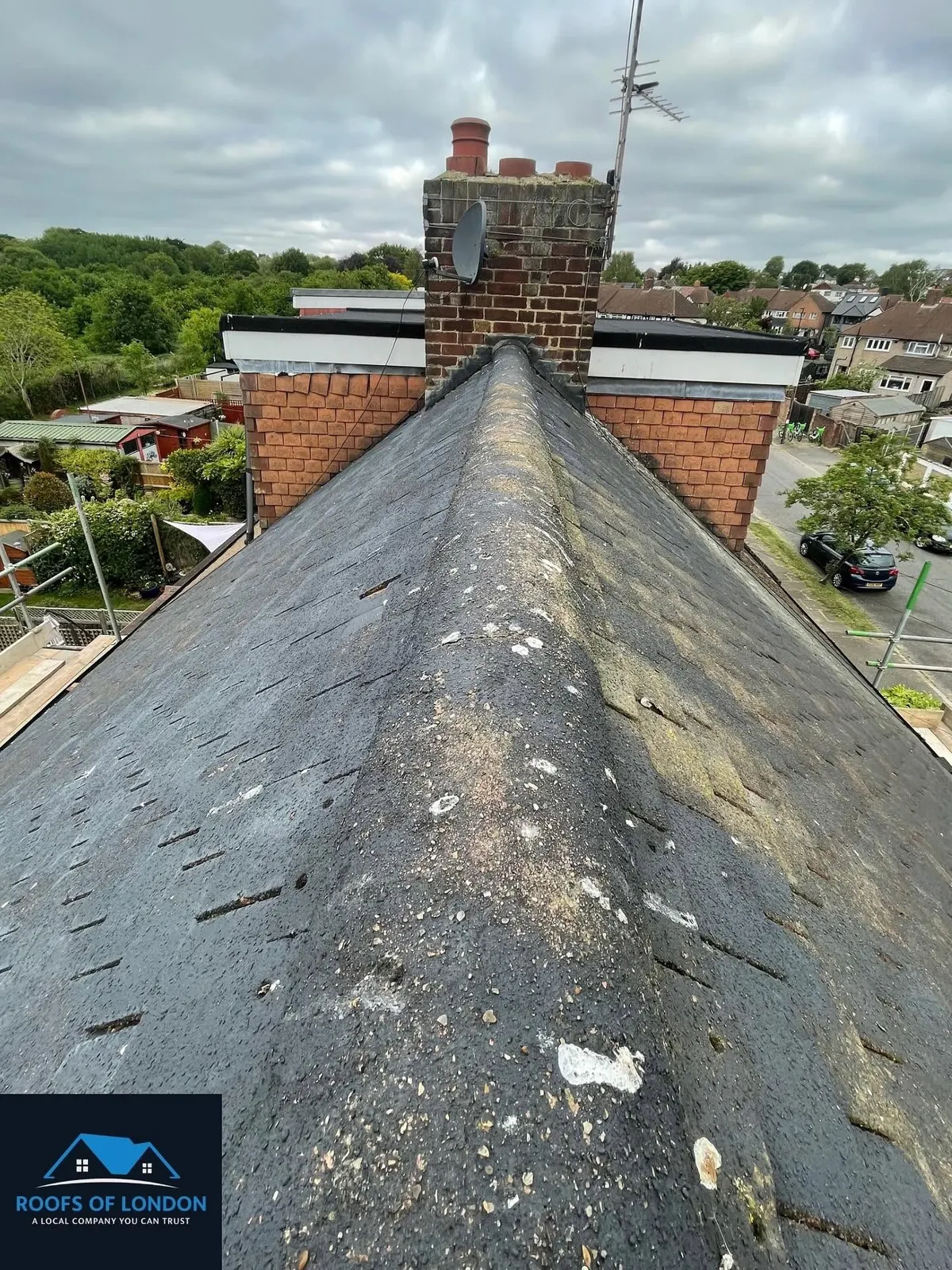
A tall stack stands well above the roof with no shelter on any side, so its mortar takes years of rain and frost. Damp around a chimney breast is usually blamed on the roof but can begin at the pointing, the flaunching around the pots or the lead where the stack meets the tiles. Finding which one is at fault is what stops the same stain returning.
- Eroded mortar joints let water into the brickwork
- Cracked flaunching at the top sends rain straight down into the stack
- Lifted or split lead flashing lets water in at roof level
- A leaning stack needs inspecting promptly, as it may need rebuilding
Period homes and conservation areas
Homes in areas such as Kippington and around the historic town centre include Victorian and Edwardian villas and substantial 20th-century houses, and older cottages in Hartslands have their own character. Several parts of the town are conservation areas, and the wider district takes in Kent Downs countryside and villages such as Seal and Otford. Listed buildings and conservation areas can have rules about materials, so it is worth checking with Sevenoaks District Council before changing the look of a roof.
- Existing tiles and slates are matched on period properties
- Sound materials are worth keeping where they can be reused
- Changing materials or removing a stack may need consent
- Mature trees can mean shaded slopes and busy gutters
Keep, repair or take down a stack
Not every chimney is still in use, and an unused stack still needs maintaining. If it adds character, repointing and new lead will usually see it right for years. If a stack is redundant and causing damp, removal may be the better answer, though on a period home it should be a considered decision.
- Repointing suits stacks that are structurally sound
- Rebuilding suits stacks that are leaning or badly decayed
- Caps and cowls protect flues no longer in use
- Stack removal includes making the roof good afterwards
How the job works
- 1Trace the dampWe inspect the stack, flashings and any loft space to work out where the water is really coming from.
- 2Agree what staysWe talk through which original materials can be kept and flag anything you may want to check with the council.
- 3Set out a written priceYou get a clear price for the agreed work and photos of the stack, so you can see what you’re paying for.
- 4Repair from the top downWork is done in a sensible order, from pots and flaunching to the brickwork and lead, with photos on completion.
Why choose us in Sevenoaks
- Close-up photos of chimney work you’d never otherwise see
- Honest advice on whether to repair, rebuild or remove a stack
- Free quotes and clear written prices in Sevenoaks and nearby villages
Common questions
Can I remove a chimney stack I no longer use?
Often, yes. We can take down a redundant stack and make the roof good. You should check first whether anything below relies on it, whether it is shared with a neighbour, and whether your home is listed or in a conservation area, where consent may be needed.
Why is my chimney breast damp when it hasn’t rained much?
Rain that got into the stack can take a long time to dry out, and old flues hold soot and salts that attract moisture. A capped flue with no ventilation can also suffer from condensation. We’ll check the stack and flashings first and give you our honest view on the cause.
How can I tell if my chimney is leaning?
Stand back and compare it with a nearby vertical edge, such as the corner of the house, from more than one side. Cracks in the mortar or missing bricks are also warning signs. If you’re at all worried, keep clear of the area below and call us on 07450 208032.
What should go on top of a chimney that’s no longer used?
Usually a cap or cowl that keeps the rain out while still letting a little air through. Sealing a flue completely can trap moisture, so ventilation matters.
Ready for a free, no-obligation quote?
Speak to our team today. London, Essex, Kent, Sussex and the Cotswolds.