
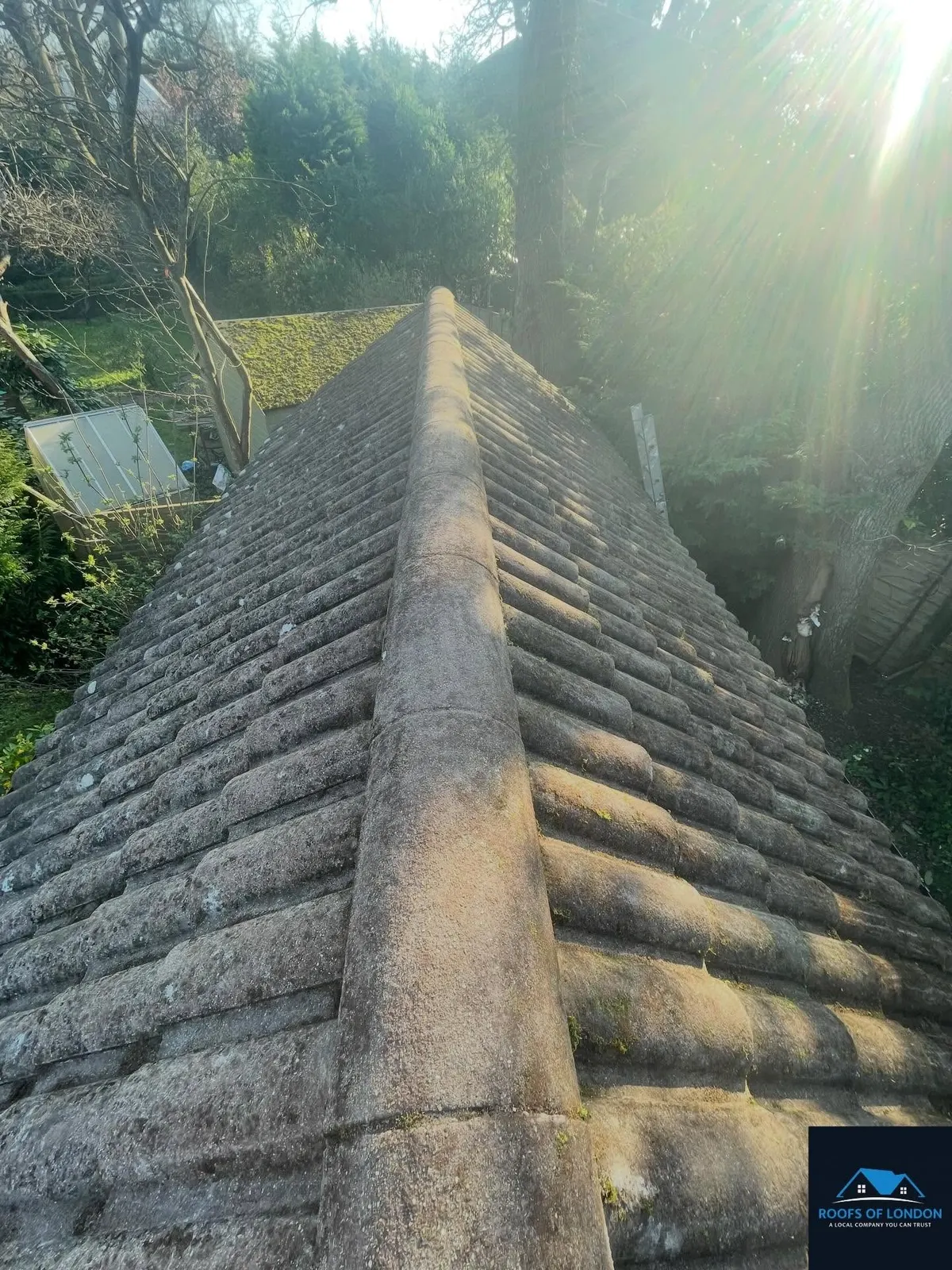
Coastal roof repairs
Roof repairs in Southend.
A roof near the Thames Estuary works harder than one further inland. Wind gets under tile edges and verges, and salt in the air wears at exposed fixings and mortar. We repair the damage and look at why that part of the roof gave way, so the next blow doesn’t undo the work.
- Storm damageand emergency leak call-outs handled
- Mon–Satopen 8am to 6pm
- Writtenprices agreed before work begins
What wind and salt do to a seaside roof
Wind pressure works on the edges of a roof first, so verges, eaves courses and ridges tend to go before the main slope. Salt air speeds up corrosion on nails, clips and older metal fixings, which leaves tiles held less firmly than they look. The closer a house sits to the seafront and the more open it is, the more this matters.
- Tiles lifted or slipped along verges and eaves
- Rusted nails and clips letting tiles move
- Mortar at verges and ridges washing out faster
- Flashings lifted where wind gets behind them
Repairs that suit an exposed position
Putting a slipped tile back is only half the job if the row around it is loose too. We check the neighbouring tiles and fixings, then re-secure what needs it. On gable ends that keep shedding mortar, a dry verge system can be a tidier option than pointing it up again.
- Slipped and missing tiles or slates replaced
- Dry verge fitted on exposed gable ends
- Dry ridge where ridge mortar keeps failing
- Lead flashing dressed back or renewed
From Leigh-on-Sea to Shoeburyness
Southend’s housing runs from Victorian and Edwardian terraces in Westcliff and Leigh-on-Sea to bungalows and interwar homes towards Thorpe Bay. Taller seafront houses and homes on the higher ground take more wind, while streets further inland usually have more ordinary wear. We judge each roof on where it sits, not on a set list.
- Taller terraces with exposed gables and chimneys
- Bungalows with long, low eaves lines
- Dormers that catch wind at the cheeks and edges
- Chimney stacks facing the estuary
How the job works
- 1Tell us what came offSend a photo of any fallen tiles or the damaged area if you can do so safely from the ground. For an active leak, we’ll do our best to get out quickly.
- 2Make it watertight firstWhere the roof is open to the weather, the priority is stopping water getting in before talking through the permanent repair.
- 3Check the fixings around the damageWe test the tiles and fixings around the problem, because the visible damage is often the edge of a wider loose patch.
- 4Repair and record itThe work is carried out to the agreed written price, with photos showing the finished repair.
Why choose us in Southend-on-Sea
- Photos of the storm or wind damage, which are handy to have for your own records.
- A written price for Southend repairs, so the cost is clear before anyone starts.
- Honest advice if a loose area needs more than a patch, and equally if it doesn’t.
Common questions
Does living near the seafront change the type of roof repair I need?
It can. Exposed homes benefit from extra attention to fixings, verges and ridges, because those are the parts wind and salt reach first. A house a mile or so inland may simply need a like-for-like tile replacement.
A few tiles came off in the wind. Is the rest of the roof safe?
Not always. If tiles came off, the ones around them may also have loosened or lost their fixings. We check that area and tell you honestly whether it is a small repair or something wider.
Is it worth fitting a dry verge on a house in Southend?
If your gable-end mortar keeps cracking or falling out, a dry verge is usually worth pricing because it is mechanically fixed instead of relying on mortar. If the existing verge is sound, leave it alone.
Ready for a free, no-obligation quote?
Speak to our team today. London, Essex, Kent, Sussex and the Cotswolds.